Cottagecore Mushroom Review for Small Business
As an experienced embroidery designer who has spent years crafting assets for boutique brands and creative studios, I approach every new file with a critical eye. Today, I am reviewing the Cottagecore Mushroom design specifically for its viability in commercial applications. This piece falls under the Fairy Tales category of Embroidery, but for small business owners, the category matters less than the execution. When evaluating a machine embroidery design for small business merch, we must look beyond the whimsical description and ask: does this hold up on a cap? Does it translate well as a branded patch? Can it withstand the rigors of frequent washing?
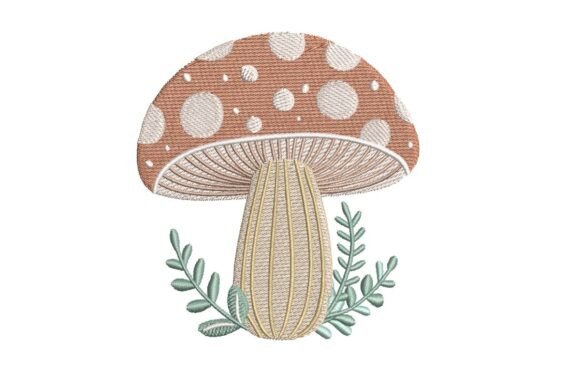
The product description invites us to "Embrace the whimsical aesthetic" with an "enchanting cottagecore mushroom embroidery design." It highlights a spotted toadstool with detailed gills nestled among soft foliage. My first impression is one of rustic charm and premium handmade quality. The mention of "detailed gills" suggests a higher stitch count and intricate fill work, which can be a double-edged sword in production. While it feels playful and elegant, the density of detail requires careful consideration regarding where it will be placed on a finished product.
Visual Personality and Brand Identity
In the world of branding, visual consistency is paramount. The Cottagecore Mushroom design exudes a friendly, organic, and slightly magical vibe. For a bakery, florist, or artisanal coffee shop, this design aligns perfectly with a brand identity that values nature, sustainability, and handcrafted care. It projects a sense of trust and warmth that customers often seek from local businesses.
However, if your brand leans towards modern minimalism or industrial chic, this design might feel too decorative. It works best when the brand story involves storytelling, heritage, or a connection to the natural world. When used correctly, such as on a tote bag design for a local market or as a logo accent on a staff apron, it elevates the perceived value of the finished product. It transforms a standard item into a collectible piece of art, encouraging customer engagement and social media sharing.
Real-World Application: Patches, Uniforms, and Apparel
Let's imagine a scenario where a small café or a handmade soap shop wants to launch a line of branded merchandise. The Cottagecore Mushroom is an excellent candidate for several specific use cases:
- Embroidered Patches: This design shines as an iron-on or sew-on patch. The defined shape of the toadstool makes it ideal for circular or shield-shaped patches that can be applied to denim jackets, canvas backpacks, or the collars of chef coats. The contrast between the spotted cap and the foliage creates a focal point that draws the eye.
- Apron Embroidery: For bakeries, florists, or craft studios, placing this design on the chest of a linen or canvas apron adds a touch of personality to the uniform. It signals to customers that the staff are part of a creative, hands-on team.
- Cap Embroidery: A curved surface like a baseball cap requires a design that isn't overly wide. If the hoop size and dimensions of the Cottagecore Mushroom are compact enough, it serves as a perfect front-center logo. However, the "soft foliage" surrounding the mushroom must be simplified if the area is limited, or it may look cluttered.
- Tote Bag Design: A large tote bag offers ample space for the full composition. This allows the "detailed gills" and surrounding leaves to breathe, creating a statement piece that customers are proud to carry.
For Etsy sellers and digital embroidery file buyers, this asset is also valuable for creating printable mockups. You can visualize how the design looks on various products before committing to production, ensuring that the thread colors match your brand palette.
Technical Challenges and Where to Use Caution
While the aesthetic appeal is high, a professional review must address potential pitfalls. The description mentions "detailed gills," which implies a high stitch density. In commercial production, high density can lead to puckering, especially on lighter fabrics or stretchy materials like jersey knit. If you plan to use this on custom apparel made of thin cotton or polyester blends, you must test the stability carefully.
There are specific scenarios where caution is required:
- Small Patch Sizes: If you attempt to digitize or embroider this design at a very small scale (under 2 inches), the fine details of the gills and spots may become muddy or disappear entirely. The intricate lines will merge, losing the definition that makes the design enchanting.
- Curved Surfaces: Embroidering on the front of a cap or a rounded mug requires a design that accounts for curvature. Complex shapes with long vertical elements can distort when pulled tight against a curve.
- Dark Uniforms: The description implies a light, whimsical color palette. On dark fabric, you may need a heavy underlay or a contrasting background, which increases the stiffness of the final product. Ensure the thread colors provide enough contrast to remain visible.
- Frequent Washing: Items like work shirts or aprons undergo constant laundering. High-density designs with many satin stitches can trap lint and wear down faster than simpler geometric logos. Consider using a tougher stabilizer to protect the integrity of the embroidered patch.
Designer Notes for Production Success
Before integrating the Cottagecore Mushroom into your inventory, follow these practical steps to ensure a professional result:
Test in Black and White First: Remove all color information from the design file. This helps you see the true stitch distribution and identify any areas that might be too crowded. If the black and white version looks cluttered, the colored version will likely suffer from thread breaks.
Check Stitch Density and Hoop Size: Verify the specifications of the digital embroidery file. If the design exceeds your machine's hoop capacity, you will need to split the file, which can compromise the alignment of the foliage and the mushroom. Ensure the design fits comfortably within your intended hoop size without cutting off essential details.
Select the Right Stabilizer: For a design with detailed gills, a cut-away stabilizer is often superior to tear-away. It provides permanent support, preventing the fabric from distorting under the weight of the stitches. This is crucial for maintaining the shape of the brand identity over time.
Inspect Fabric Texture: Test the design on the actual fabric you intend to use. The interaction between the fabric texture and the smooth satin stitches of the mushroom cap can vary significantly. A rough burlap might hide the details, while a smooth sateen might show every imperfection.
Create a Mockup: Before running a bulk order, create a physical sample. Place it next to other design assets your brand uses to ensure visual consistency. Does the whimsical style clash with your typography? Does the scale look right compared to your text logo?
Confirm Commercial Licensing: As a buyer of a digital embroidery file, always verify the license terms. Ensure you have the right to use the Cottagecore Mushroom for commercial purposes, including selling items with the design embroidered on them. Some licenses restrict the number of units you can produce.
Final Verdict on Commercial Viability
The Cottagecore Mushroom is a strong contender for small businesses looking to add a touch of magic to their handmade product lines. Its detailed nature commands attention and conveys a sense of craftsmanship that resonates with customers who value authenticity. Whether used as a branded product add-on or a primary logo element, it has the potential to enhance customer trust and recognition.
By paying close attention to stitch density, stabilizer choice, and placement, you can mitigate the risks associated with detailed designs. When executed correctly, this embroidery file becomes more than just a decoration; it becomes a signature element of your brand's visual language, turning simple merchandise into memorable keepsakes for your clientele.